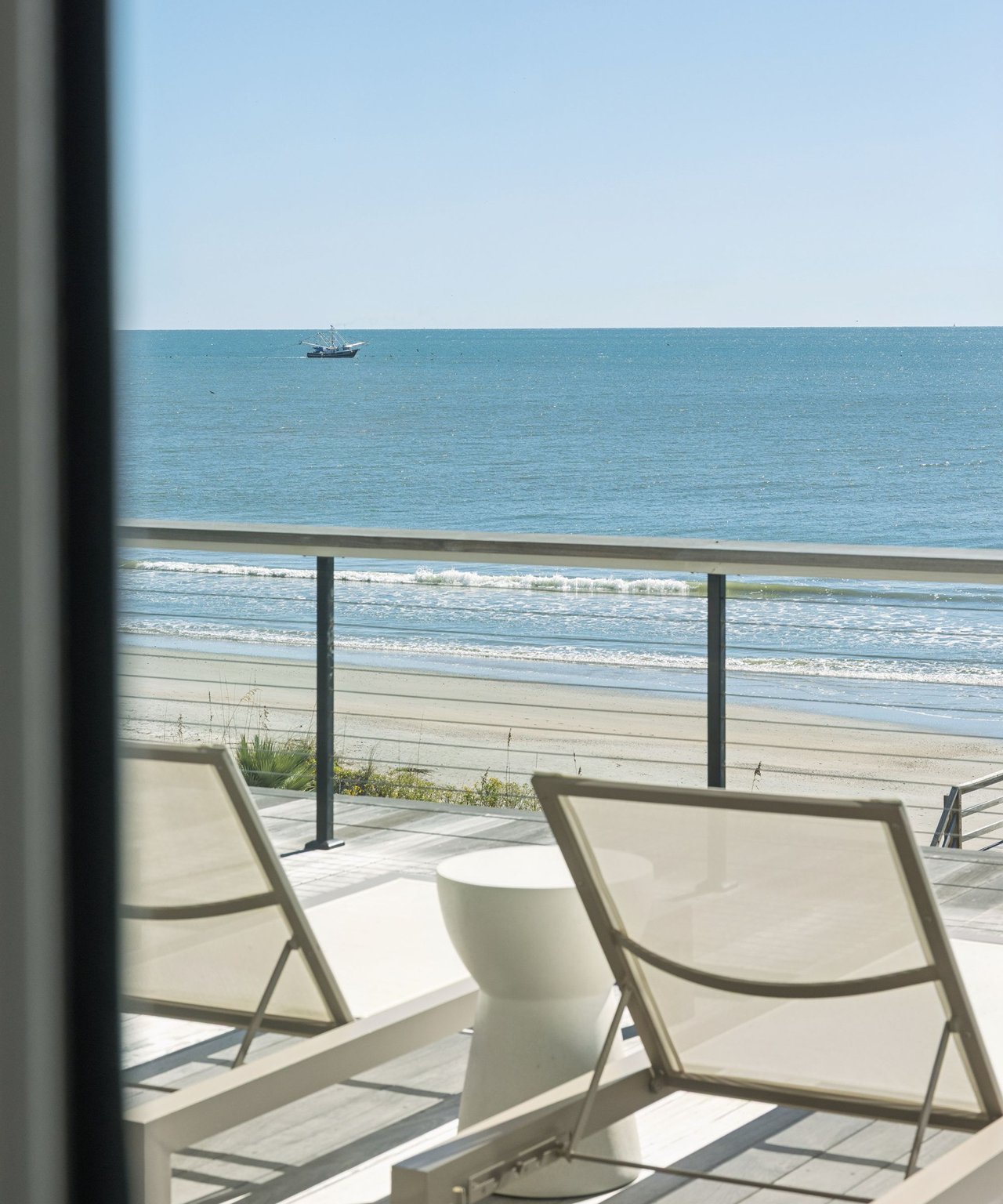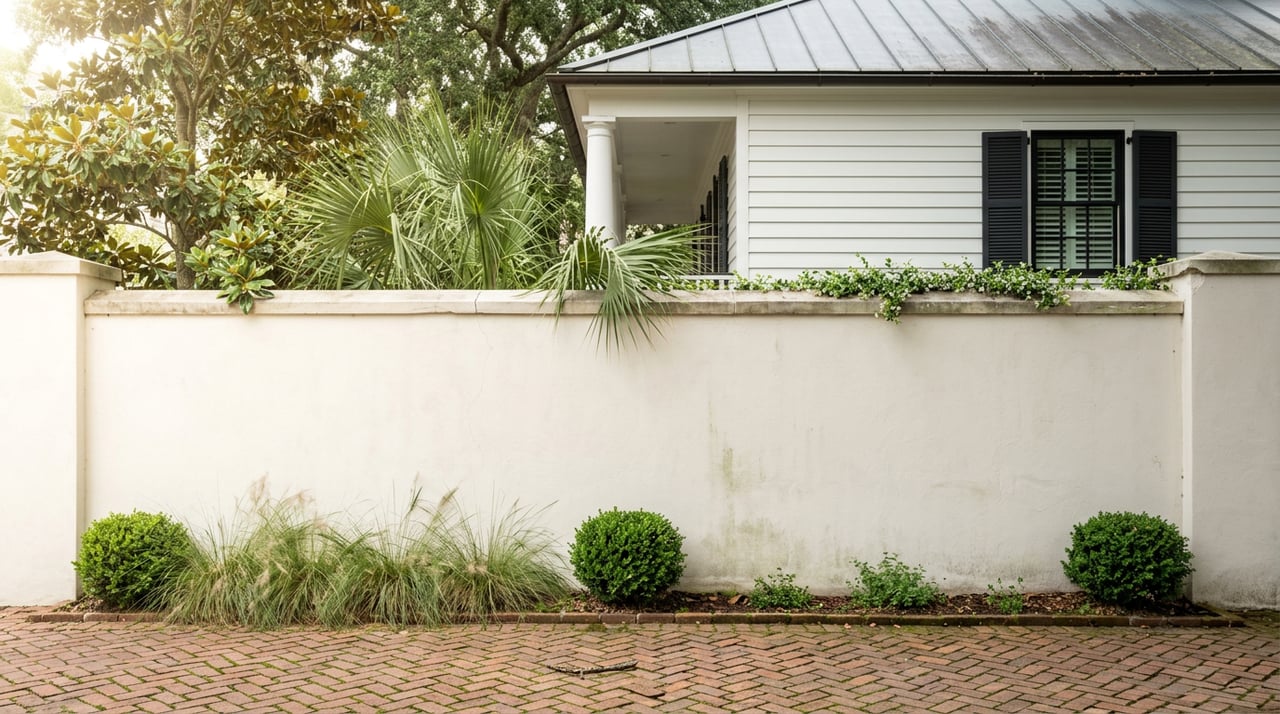
Two houses sit across the street from each other in Harleston Village. Both are listed at $1.4 million. Both are brick single houses with piazzas, both around 2,900 square feet, both built before the Civil War. One will cost the buyer roughly what the pro forma says. The other will cost that plus a year of design fees, two BAR appearances, and an insurance premium four times the neighbor's.
The list price is the least reliable number in a Lower Peninsula transaction. The mechanisms that actually move the total are the Board of Architectural Review's calendar and the FEMA flood map, and neither one shows up on the MLS sheet.
The friction that shows up on paper before it shows up in cost
Charleston passed the first historic preservation ordinance in the United States in 1931, and the Board of Architectural Review it created still reviews nearly every visible change to a house in the Old and Historic District. New construction, additions, accessory buildings, window replacement, roof replacement, even paint colors visible from the public right-of-way are inside the board's purview.
The board sits in two forms. BAR-Large hears bigger projects and caps its agenda at eight items. BAR-Small hears the rest and caps at fifteen. The BAR-S agenda for July 9, 2026 filled before the deadline, and the next opening, July 23, has a submittal cutoff of July 6 at noon. That is the everyday texture of a peninsula renovation calendar.
Approval comes in two passes. Conceptual first, then final once the details are worked out, with the board meeting about twice a month and a submittal deadline roughly two to three weeks ahead. A clean residential project typically takes one to two months to clear both passes. A contested one takes longer.
A homeowner in the Old and Historic District cannot double a footprint, wrap an addition around the front, or hide the original corners of the house. Additions are supposed to read as subservient to the historic form. Charleston-area additions run $150 to $300 per square foot in 2026, with coastal construction sitting 15 to 30 percent above inland work once hurricane-rated materials and flood-compliant foundations are priced in. A basic screened porch, the most common addition on the peninsula, lands between $25,000 and $60,000, and if the flood elevation forces pilings instead of a slab, add $5,000 to $15,000 more.
The transaction consequence: two identical-looking single houses on Bull Street can carry very different renovation ceilings depending on their BAR category rating, whether elements are visible from the right-of-way, and whether an earlier owner already used up the "subservient addition" allowance out back. Ask for the BAR history on any property before you write the offer. The address's file at 2 George Street is public.
The block-by-block flood problem
Zip codes 29401 and 29403 do not sit in a single flood zone. They sit in a patchwork, and the patchwork does not respect neighborhood boundaries.
- Zone AE covers most of the low peninsula, including large portions of South of Broad, the French Quarter, and low-lying blocks of Harleston Village and Ansonborough. Federally backed mortgages require flood insurance in AE.
- Zone X runs along the King Street spine and pockets of Radcliffeborough and upper Cannonborough-Elliottborough. Flood insurance is not required by a federal lender in Zone X, though NOAA projects Charleston could see 60 to 75 annual flood events by 2050, and Zone X properties on a coastal peninsula still take on water.
- Zone VE, the wave-action designation, does not touch most of the peninsula but does drive up premiums where it appears elsewhere in the county.
The gap between an AE and an X policy on the same block is the difference between a rounding error and a five-figure line item. In Charleston County, which carries more NFIP policies than any other county in South Carolina at more than 60,000 active policies and 933 recorded claims totaling over $18.5 million, AE and VE premiums commonly run into the thousands annually while a Zone X policy for a similar structure can be under $800. The single-family median list in 29401 was $895,000 as of the June 2026 downtown market read, and the April 2026 Harleston Village median list ran $1.37 million at $849 per square foot. Neither figure tells you which side of the zone line the property sits on.
Pull the FEMA flood map for the exact parcel before you make an offer. The FEMA Map Service Center shows the currently effective FIRM at the address level. Every property in the City of Charleston is technically in a flood zone; the question is which one.
The elevation certificate is a pricing lever, not a formality
Where an FIRM map assigns a zone, an elevation certificate documents the specific building's lowest finished floor against the Base Flood Elevation. On an AE parcel, a favorable elevation certificate can move an NFIP premium from painful to manageable. On a historic single house that predates modern flood standards, the certificate can confirm what you already fear.
A new certificate runs roughly $950 from a licensed South Carolina surveyor and takes about a week. If the seller has one on file, verify it against the current FIRM; the maps have changed, and an older certificate may no longer reflect the property's rating. Roughly half the time, buyers on the peninsula end up needing a fresh certificate rather than relying on the one in the seller's file.
Then layer the Community Rating System discount on top. The City of Charleston sits at CRS Class 6, which qualifies city residents for up to a 20 percent NFIP premium discount. Unincorporated Charleston County sits at Class 2, one of the best community ratings in the country, worth up to 40 percent off. That 20-point gap is invisible until you compare two quotes side by side, and it explains why a marsh-front home outside city limits can insure for less than a peninsula home worth twice as much.
The private market matters here too. Private carriers write flood policies with a 10-day waiting period against the NFIP's standard 30-day wait. Neither binds coverage once a named storm is in the Atlantic, which is why the offer window and the insurance window need to line up before a hurricane advisory ever posts.
What this means when you compare two listings
Assume you are choosing between a $1.35 million house in South of Broad and a $1.35 million house on the King Street side of Harleston Village. On paper, they look identical. In practice:
The South of Broad house is almost certainly AE, likely not elevated to current BFE, and any material change to the front or side is BAR-S territory with a two-pass approval and a queue that fills weeks in advance. Your carrying cost includes a flood premium in the low four figures at minimum, and your renovation ceiling is set by what the board will approve, not by what your architect can draw.
The King Street side house may be Zone X, in which case the lender will not require flood insurance and a private carrier will likely quote you under a thousand a year for voluntary coverage. If the parcel is still inside the Old and Historic District boundary, BAR applies. If it sits just outside, it does not, and your renovation timeline shortens by months.
The correct move before writing an offer on the peninsula is not "get a home inspection." It is: pull the FIRM zone, request the elevation certificate, price a flood quote from both an NFIP agent and one of the private carriers, and pull the BAR file on the address. Do that in the diligence window, not after closing.
Quick answers
Do all peninsula purchases need flood insurance? No. A federally backed mortgage requires it in Zone AE or VE. Zone X properties are not federally required to carry it, though voluntary coverage is inexpensive and worth pricing.
Can I get a project through the BAR faster than two months? Clean, small residential projects can clear in two meetings. Anything the board flags for revision, or anything requiring a site visit and neighbor comment, will stretch. Plan on months, not weeks, and file early against the agenda cap.
Does the CRS discount apply automatically? It applies to properties within the participating community's boundary and is reflected on the NFIP policy declarations. Confirm the discount is on the quote in writing before you close.
The Lower Peninsula rewards buyers who read past the list price. Two numbers on the MLS sheet, price and square footage, are not the transaction. The transaction is the parcel's zone, the certificate on file, the CRS rating of the taxing jurisdiction, and the length of the queue at 2 George Street. If you want the property priced against its real carrying cost before you write the offer, that is the work the team at Smith Spencer Real Estate does with clients every week. Contact us to walk a property with the full picture in hand.