If you are looking at Charleston’s Upper Peninsula, you are probably asking a simple question with a not-so-simple answer: what does it actually feel like to live there? This part of 29403 is not one-note, and that is exactly why so many buyers find it interesting. You get a mix of historic texture, newer development, walkable daily routines, and real urban trade-offs. Let’s take a closer look.
Upper Peninsula at a Glance
Charleston’s Upper Peninsula sits on the upper eastern side of the peninsula, and the City of Charleston describes it as an area transitioning from heavy industrial and commercial roots to modern workplaces, retail, restaurants, and dense housing. That history still matters today because it helps explain why the area feels layered instead of polished into one uniform look.
In practical terms, 29403 is compact and urban. Census Reporter shows 22,533 residents living within 5.4 square miles, with 10,862 households and an average of 2 people per household. The median age is 30, the mean commute is 17.3 minutes, and the median owner-occupied home value is $674,000.
That data points to a neighborhood environment that feels active, connected, and distinctly in-town. It also helps explain why so many people exploring this part of Charleston are drawn to convenience, proximity, and character over bigger-lot suburban living.
Neighborhood Feel Is Block by Block
One of the first things you notice in the Upper Peninsula is that it does not feel the same from one block to the next. Historic Charleston Foundation describes North Central as a mixed-use area between Rutledge Avenue and I-26 with residential and commercial spaces, early 20th-century single-home houses, and a King Street corridor.
In Cannonborough and Elliottborough, the building stock developed over many years, with features like corner stores and freedman’s cottages noted in city appraisal materials. That long development pattern creates the kind of variation buyers tend to notice right away.
This is a big part of what makes the Upper Peninsula appealing. You are not choosing from one standard neighborhood formula. Instead, you are looking at a part of Charleston where the streetscape, housing style, and daily rhythm can shift as you move through the area.
Walkability Shapes Daily Life
If you want a neighborhood where you can get out and do things without planning your whole day around the car, the Upper Peninsula stands out. Walk Score rates 29403 at 74 and labels it very walkable, with about 202 restaurants, bars, and coffee shops in the area.
That shows up in everyday routines. You can picture morning coffee, a lunch meeting, a walk through the neighborhood, and an evening out without long drives across town. Combined with the average 17.3-minute commute reported by Census Reporter, the area tends to support a shorter-trip lifestyle.
For many buyers, this is the real draw. The Upper Peninsula often feels more about access and activity than square footage and yard size.
Food and Coffee Are Part of the Routine
The neighborhood’s commercial energy is not limited to a few destination spots. Food and coffee are woven into daily life, which makes the area feel lived-in and social.
Lillian’s Petite Market and Eatery on Congress Street serves coffee, breakfast, lunch, brunch, and dinner near Hampton Park. The Daily on King Street adds another familiar stop for morning and midday routines.
King Street remains a major anchor for the broader area. The City of Charleston’s 2024 King Street Profile says downtown Charleston is the region’s shopping and dining hub, draws more than 7 million visitors each year, and had 92 percent occupancy in the Line-to-Broad corridor in 2024. That helps explain why this part of town often feels active rather than purely residential.
Arts and Culture Feel Close By
For buyers who want city life to include more than restaurants and errands, the Upper Peninsula offers easy access to arts and culture. Charleston Music Hall is on John Street in 29403, and Redux Contemporary Art Center is on King Street.
The wider Charleston arts scene also shapes the area’s identity. The City of Charleston says Piccolo Spoleto has operated since 1979 and includes more than 500 arts events citywide each year.
In everyday terms, that means the Upper Peninsula often feels plugged into what is happening in Charleston. You are not living on the edge of the action. You are living near places people actually go for music, exhibits, and city events.
Green Space Is Better Than Many Expect
One surprise for some buyers is how much park access this in-town area offers. Hampton Park is one of Charleston’s largest parks and includes trails, restrooms, parking, picnic tables, playground space, and floral displays.
The city also operates Tiedemann Park Nature Center & Playground, Mitchell Playground, Martin Park, and Brittlebank Park within 29403. That gives the area more breathing room than many people expect from a compact urban ZIP code.
Hampton Park’s fitness trail is also popular with The Citadel students, which adds to the area’s active daytime feel. If you want a neighborhood where city living still includes outdoor space, that is a meaningful plus.
Housing Is Mixed, Not Uniform
The Upper Peninsula is not defined by one housing type. That can be exciting for buyers, but it also means you need to look carefully at each block and property.
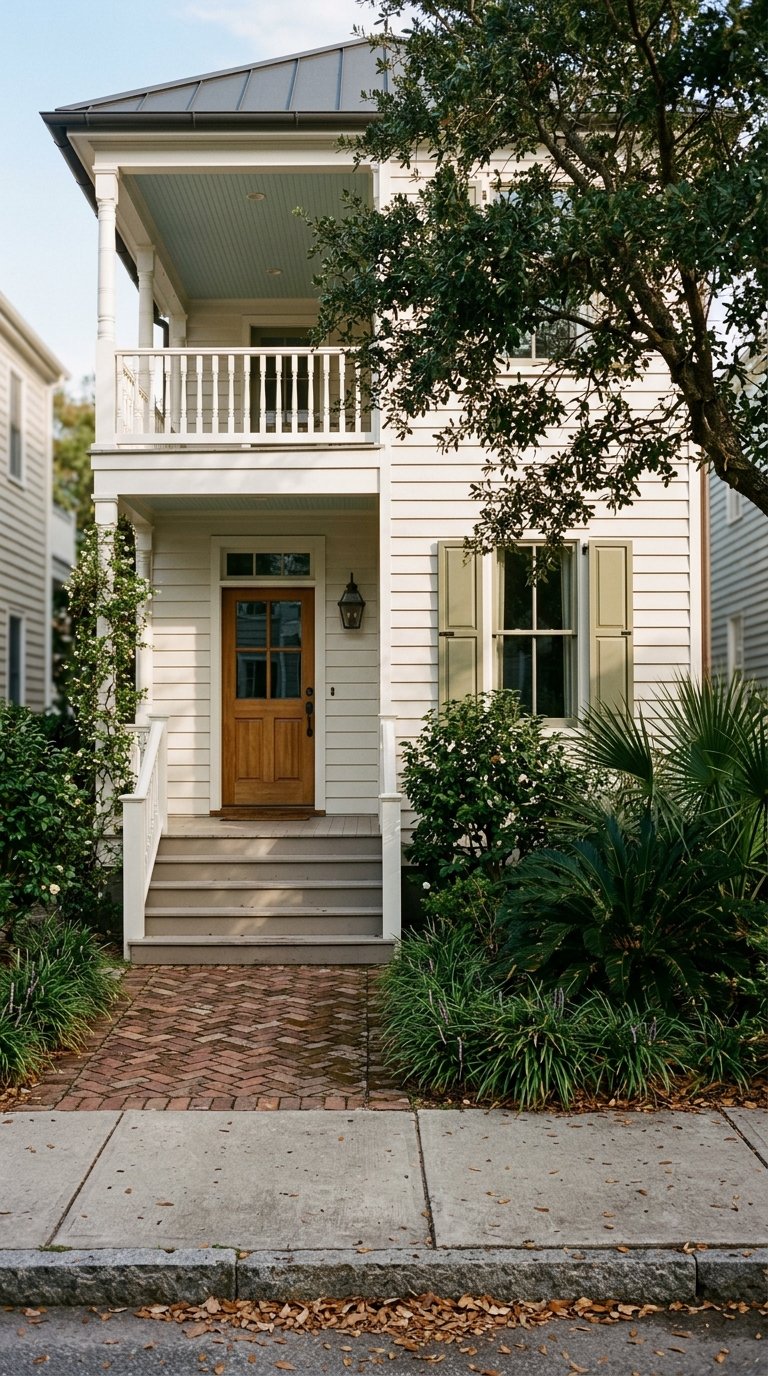
Historic Charleston Foundation points to early 20th-century single-home houses in North Central, while the Cannonborough and Elliottborough building stock includes older cottages and structures from different periods. The result is a housing landscape with more variety than consistency.
You may see historic homes, mixed-use corridors, apartments, and newer redevelopment in relatively close range. For some buyers, that layered character is the point. For others, it means spending more time getting clear on which pocket of the Upper Peninsula fits their lifestyle best.
Growth Is Ongoing
The Upper Peninsula is still evolving. The city created the Upper Peninsula Initiative and later the Upper Peninsula Zoning District to guide growth toward sustainable development, workforce housing, open space, transportation improvements, stormwater management, green infrastructure, and electric-vehicle charging.
That planning framework helps explain why you continue to see new apartments, mixed-use buildings, and redevelopment projects in the area. The city also ties certain height and density bonuses to public benefits like open space, transportation improvements, renewable energy, and high-performance building standards.
For buyers and sellers, this matters because the neighborhood is not static. What you see today is part of a longer growth story that continues to shape the area’s look, housing options, and street-level experience.
Trade-Offs Are Real
Every neighborhood has trade-offs, and in the Upper Peninsula they tend to be urban ones. If you want quiet suburban spacing, large yards, and a car-dependent layout, this may not be the right fit.
There are also practical considerations tied to infrastructure. The City of Charleston says the Huger Street and King Street intersection has flooded during major rain events for years and is being upgraded with drainage and pump-station improvements.
Mobility is another part of the picture. Census Reporter shows that 25.3 percent of 29403 residents moved during the prior year, which suggests a fairly mobile resident base.
None of that makes the area less compelling. It just means your decision should be based on the kind of lifestyle you want, not just the charm of a single street or house.
Who the Upper Peninsula Fits Best
Based on its walkability, mixed-use planning, older housing stock, and access to food, parks, and culture, the Upper Peninsula tends to fit buyers who want an in-town Charleston lifestyle. It can be especially appealing if you value historic character, shorter trips, and a neighborhood with visible energy.
It may be less ideal if your top priorities are larger lots, a quieter suburban feel, or a more uniform housing environment. The Upper Peninsula tends to reward buyers who appreciate nuance and understand that the appeal is in the mix.
That is why neighborhood guidance matters here. In a place where one section can feel very different from the next, local context can help you narrow in on the right fit much faster.
If you are considering a move in or around downtown Charleston, Smith Spencer Real Estate can help you compare neighborhoods, evaluate property fit, and move forward with clear local guidance.
FAQs
What is Charleston’s Upper Peninsula like for daily living?
- It generally feels urban, active, and walkable, with a mix of housing, restaurants, coffee spots, parks, and cultural venues throughout 29403.
Is Charleston’s Upper Peninsula walkable?
- Yes. Walk Score rates ZIP code 29403 as very walkable with a score of 74, and the area includes about 202 restaurants, bars, and coffee shops.
What kinds of homes are in Charleston’s Upper Peninsula?
- Housing is mixed and varies by block, including early 20th-century single-home houses, older cottages, apartments, mixed-use buildings, and redevelopment projects.
Does Charleston’s Upper Peninsula have parks and green space?
- Yes. Hampton Park is one of the city’s largest parks, and 29403 also includes Tiedemann Park Nature Center & Playground, Mitchell Playground, Martin Park, and Brittlebank Park.
Is Charleston’s Upper Peninsula still developing?
- Yes. The City of Charleston continues to guide growth through the Upper Peninsula Initiative and Upper Peninsula Zoning District, with a focus on housing, transportation, open space, and infrastructure.
What are the trade-offs of living in Charleston’s Upper Peninsula?
- The trade-offs are mostly urban, including denser development, less emphasis on large yards, and infrastructure considerations like flooding concerns in some areas during major rain events.