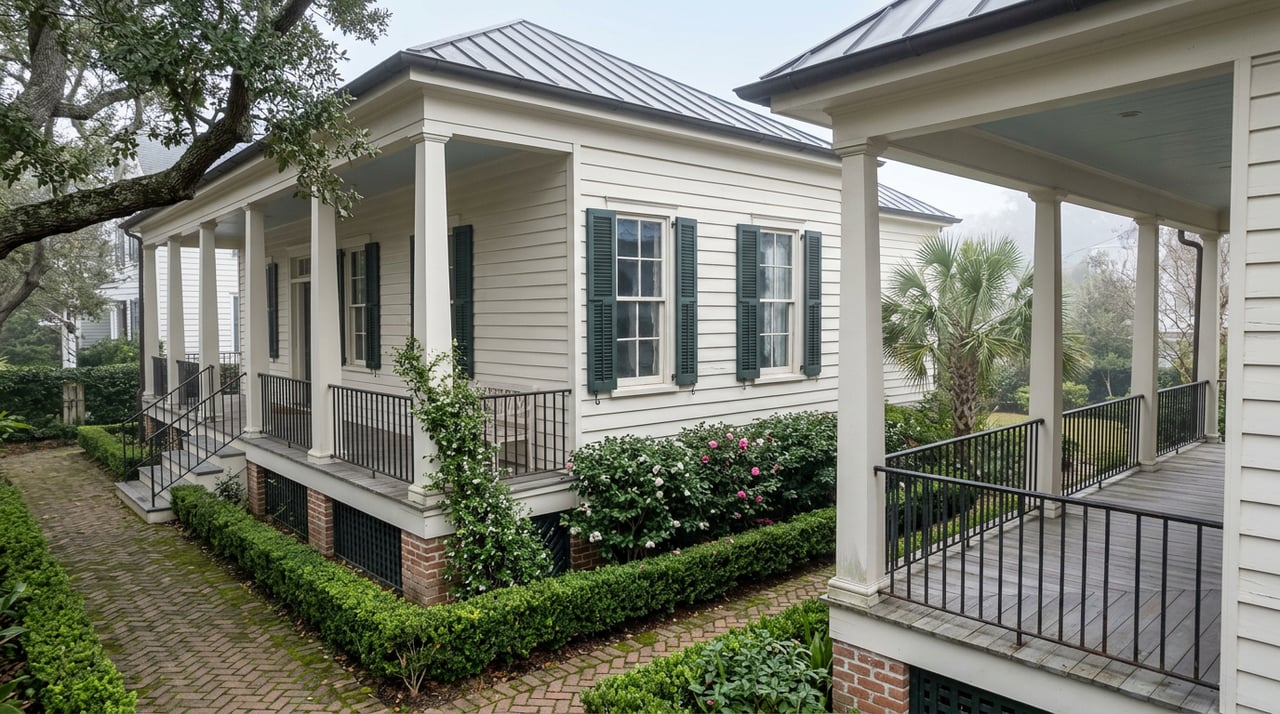
Ask most buyers touring I'On what they're signing up for and they'll describe the porches, the lake paths, the walk to O'Brion's Pub & Grille or The Square Onion for dinner. Ask them who governs the neighborhood and most will say "the HOA," singular, the way you'd describe any subdivision's rulebook.
That answer is wrong in a way that matters at closing. I'On isn't governed by one association. It's governed by three separate legal entities, each with its own authority, its own fee, and its own name on your paperwork. Missing that distinction is how buyers end up surprised by a second bill, a third-party design review they didn't budget time for, or a rental plan that a covenant quietly forecloses months after they've moved in.
Three Names, One Envelope
Every titleholder in I'On becomes a member of the I'On Assembly, the nonprofit that administers the covenants, runs design review, and maintains the Commons, the parks, lakes, and paths that make the neighborhood feel like a village instead of a subdivision. Separately, the I'On Trust holds its own transfer-fee claim written into the original Declaration. Separately still, the I'On Club, the pools, tennis courts, and fitness facilities, bills membership on its own schedule and isn't required to own a home there.
| Entity | What it governs | What it bills |
|---|---|---|
| I'On Assembly | Covenants, design review, Commons upkeep | Base annual dues of roughly $1,650, plus a buyer-side transfer assessment |
| I'On Trust | Original Declaration transfer rights | A seller-side transfer fee at closing |
| I'On Club | Pools, tennis, fitness | Separate, optional membership dues |
Streets, sidewalks, and median strips, meanwhile, belong to the Town of Mount Pleasant, not to any of the three. That distinction shapes who you call for a maintenance issue and who has standing to enforce a rule against you.
Why the Transfer Fee Splits the Way It Does
I'On carries a resale transfer fee that totals 0.25% of the transfer-tax base, and it doesn't land on one party. The buyer pays 0.15% to the Assembly, a provision recorded in a Fourth Amendment back in 2010. The seller pays 0.10% to the I'On Trust, a right that traces to Article X of the original Declaration. Two different fees, two different legal instruments, two different recipients, both triggered by the same sale.
For a buyer, that split fee is easy to miss if you're only scanning a listing sheet for the base HOA dues. It shows up on the closing statement as a separate line, tied to an entity most out-of-market buyers have never heard of until the settlement agent explains it.
The Design Rulebook You're Agreeing to Is Being Rewritten This Year
New construction and exterior changes in I'On go through the Assembly's design review process. Buyers typically treat that as a fixed checklist. It isn't. That process is under active revision right now, with the Assembly moving toward interim inspections during construction, adding more meetings with design coordinators, and shifting toward case-by-case review of rooftop solar installations rather than a blanket policy.
That matters for anyone buying with renovation plans already in mind. A buyer who assumes today's approval process will look the same in eighteen months is underwriting a moving target. The rules you read in the covenants before closing describe the framework. They don't describe the exact review workload, timeline, or solar posture you'll face once you're actually submitting plans.
Your Lot Type, Not Your Listing Photo, Sets the Ceiling
I'On classifies every parcel as an all-yard, side-yard, or rear-yard lot, a designation the Town of Mount Pleasant's zoning department assigns, not the seller or the listing agent. That classification determines building coverage, setbacks, and how much room you actually have for an addition, a garage, or a larger porch.
Two homes that look nearly identical from the street can carry different lot types and, as a result, different renovation ceilings. A buyer comparing two listings on price and square footage alone, without confirming lot type, is comparing two different sets of future options without realizing it.
Twenty-Eight Days, by Covenant, Not by Town Code
I'On's covenants bar leasing any lot for fewer than 28 consecutive days. That's a private restriction written into the Declaration, enforced by the Assembly, not a town ordinance that could shift with a Mount Pleasant council vote or a licensing waitlist. Other parts of the Charleston area, including some beach towns closer to the water, permit much shorter-term rentals under their own local rules. I'On simply isn't one of them, and the restriction sits at the HOA level rather than the municipal one.
For a buyer weighing an I'On purchase partly as a short-term income property, that distinction closes the door before the numbers even get run. For a buyer who wants a quiet, owner-occupied street, it's part of what the covenant is actually protecting.
What the Per-Square-Foot Number Is Actually Measuring
Public sales data for the three months ending May 2026 put I'On's median sale price at roughly $2.2 million, up about 7.5% from the same period a year earlier. Price per square foot ran near $778, up roughly 37% year over year. At the same time, homes averaged 126 days on market, nearly double the 69-day average from the year before, on a thin trailing count of around 15 closings that month.
Read those together and a pattern emerges that a headline median price hides. Buyers are paying substantially more per square foot for a smaller pool of homes that take longer to sell. That's not the signature of a neighborhood winning on scarcity alone. It's the signature of a market where buyers are pricing in the governance structure itself, the design continuity the Assembly protects, the rental restriction that keeps turnover low, the Commons upkeep the dues fund, not just the square footage or the lot. When the first I'On Village homes sold for around $160,000 in 1998, they were selling a plan and a promise. In 2026, at roughly ten times that price, buyers are underwriting an active, ongoing governance system, one that is, as this piece has laid out, still being written.
Before You Sign
A handful of steps turn these structural details from surprises into known quantities before you're under contract:
- Request the current fee schedule from the I'On Assembly and confirm whether the I'On Trust transfer fee applies to your specific transaction.
- Ask the seller or the seller's agent whether the Club membership transfers, lapses, or requires a new application, since it's billed and administered separately from the Assembly.
- If you're planning any exterior work, ask the Assembly directly about the current state of design review, since the process is mid-revision and what applied a year ago may not describe what you'll face.
- Confirm your lot's official classification with the Town of Mount Pleasant's zoning department before you assume a renovation is possible.
- If short-term income is part of your plan, rule I'On out early. The 28-day minimum isn't a negotiable town policy.
FAQ
Is I'On Club membership required to live in I'On? No. The Club, with its pools, tennis courts, and fitness facilities, bills and operates separately from the Assembly, which is the entity every titleholder is required to join.
Can I rent my I'On home short-term? No. The covenants bar any lease under 28 consecutive days, a restriction enforced at the HOA level rather than through Town of Mount Pleasant licensing.
Who decides whether I can add on to an I'On home? Two parties matter here: the Town of Mount Pleasant, which assigns your lot's official classification and governs setbacks, and the I'On Assembly's design review process, which is currently being revised and should be confirmed directly before you plan any project.
If you're evaluating I'On against other Mount Pleasant neighborhoods, or trying to figure out what a specific address's lot type, fee structure, or design review status actually looks like before you write an offer, Smith Spencer Real Estate can walk the covenants and the numbers with you before you're committed to either.