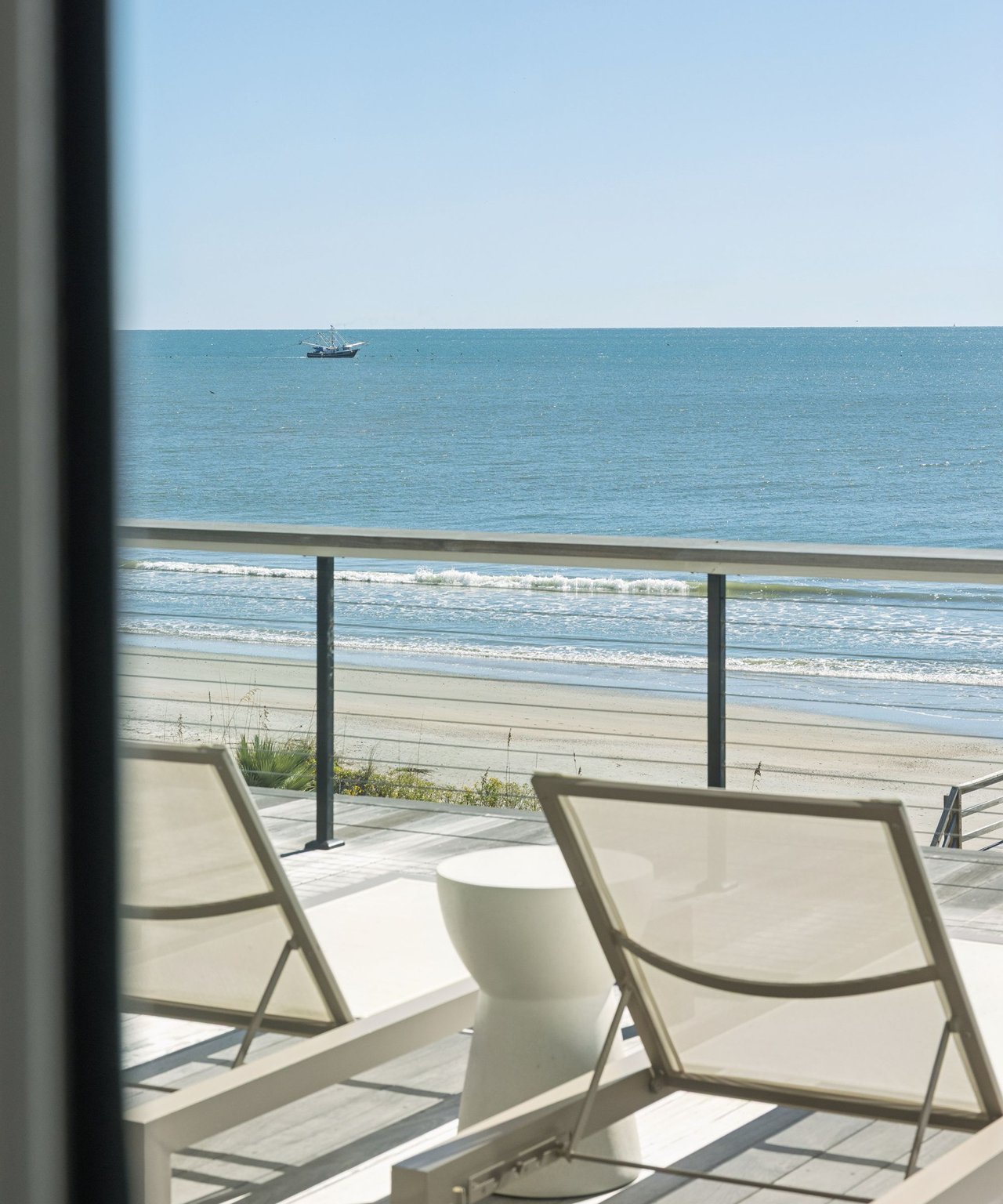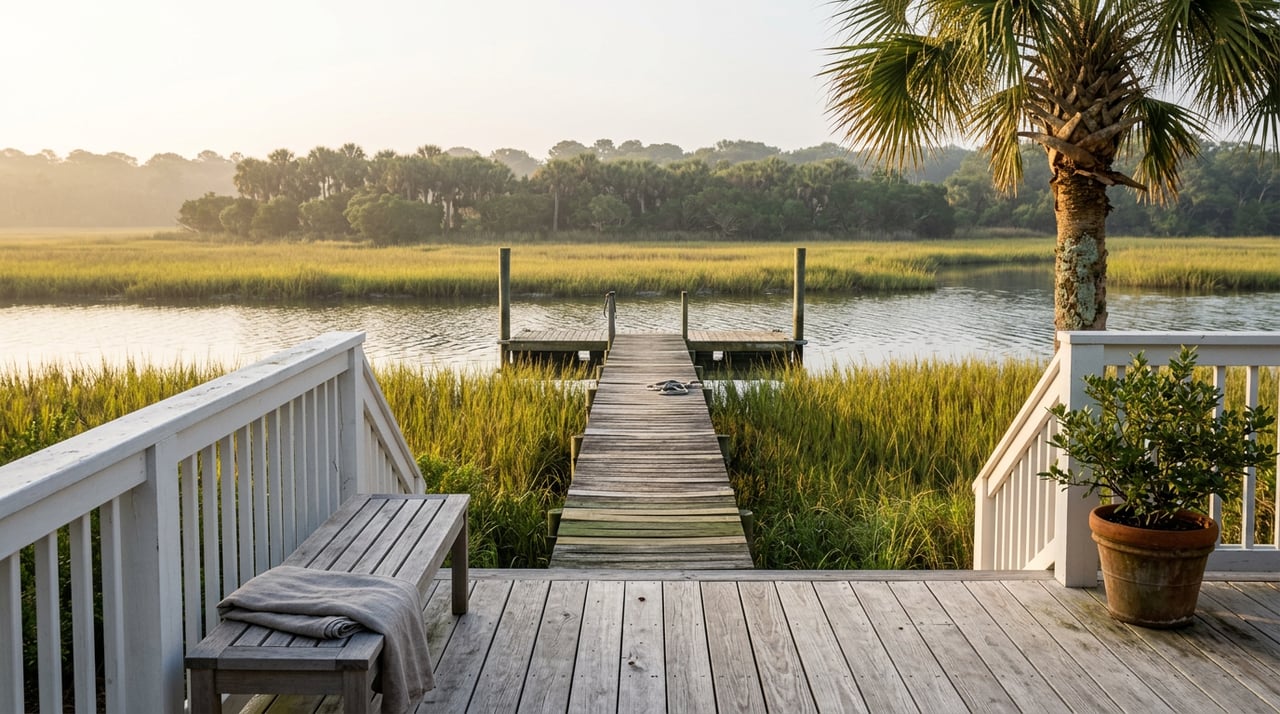
Ask a buyer why a house on Sullivan's Island runs nearly $1,350 a square foot when a comparable place on Isle of Palms goes for closer to $1,000, and most land on the same answer: no short-term rentals. No weekend turnover, no hotel-style crowds, just neighbors. That premise has held since 2001, when the town banned rentals under 30 days. As of this February, it has a hole in it, and Sullivan's Island has not yet decided how to patch it.
The Zoning That Built the Premium
Sullivan's Island's real estate math starts with a document most buyers never read: the 1977 zoning ordinance. When the state transferred the island from public to private ownership that year, the town set half-acre lots with one single-family home apiece and confined commercial activity to a narrow stretch of Middle Street. No hotels were ever contemplated. Two decades later, when rentals under 30 days began proliferating along the rest of the Lowcountry coast, the town closed that door too, banning them outright in 2001 and 2002 with a small number of pre-existing rentals grandfathered in.
The result is a barrier island with fixed land supply, a single-family pattern that has barely changed in almost fifty years, and no mechanism for outside capital to chase rental yield. That combination is why Sullivan's Island has commanded the highest prices in the Charleston region for years. It is also why the premium is not really about the house. It is about the ordinance standing behind the house.
The Numbers Behind the Gap
In a national listing snapshot from spring 2026, Sullivan's Island carried a median list price of $4.55 million and roughly $1,348 per square foot, with 32 homes on the market moving at a median of 80 days. Isle of Palms in the same window showed a median list price of $2.15 million, about $998 per square foot, 126 homes for sale, and a 47-day median. Sullivan's Island also closed out 2025 with a median sale price near $4.2 million according to the Charleston Trident Association of Realtors, though the group cautions that with so few transactions, that figure can swing hard from quarter to quarter.
The gap between the two islands is not really about beach quality or bridge access. It is about which island a buyer is legally allowed to monetize.
| Market (spring 2026 snapshot) | Median list price | Price per sq ft | Homes for sale | Median days on market |
|---|---|---|---|---|
| Sullivan's Island | $4.55M | $1,348 | 32 | 80 |
| Isle of Palms | $2.15M | $998 | 126 | 47 |
The Case: 2 SC Lighthouse, Pacaso, and an I'on Avenue Address
In 2022, an LLC called 2 SC Lighthouse bought a home on I'on Avenue and began selling it in one-eighth shares through Pacaso, a company that structures fractional ownership of second homes. Each co-owner paid Pacaso $99 a month for a scheduling system called SmartStay and could stay between two and fourteen nights per share, with no money changing hands for the stays themselves.
The town's Zoning Administrator, Charles Drayton, issued a violation that October, arguing the arrangement functioned as a prohibited vacation rental. The Board of Zoning Appeals agreed, voting 7-0 against Pacaso. A Charleston County Circuit Court affirmed that decision in 2023. Represented by attorney and Charleston City Councilman Ross Appel, Pacaso and 2 SC Lighthouse appealed again, and on February 18, 2026, the South Carolina Court of Appeals reversed the lower courts in a 2-1 decision.
What the Court Actually Decided
The opinion, authored by Chief Appellate Judge H. Bruce Williams, turned on a distinction that sounds narrow but carries real weight: the difference between an owner and a tenant. Because no one staying at the property paid to be there, and because the co-owners genuinely held title to the home, the court found no landlord-tenant relationship existed. Without that relationship, the town's own definition of a vacation rental simply did not reach the arrangement. As the court put it, the ownership structure "does not constitute commercial use of the property."
The ruling is unpublished, meaning it does not set binding precedent for future cases the way a published opinion would. But its practical effect on this property, and on how the town can enforce its ordinance as written today, is real.
The Town's Options, and the Clock Nobody's Watching Yet
The reaction on the island was immediate. Tim Emrich, who founded a resident group called Stop Pacaso after the 2022 violation and has kept yard signs up across the island since, called the ruling disappointing.
"This is a close legal question that deserves a definitive answer from the South Carolina Supreme Court."
Sullivan's Island Town Administrator Joe Henderson declined to comment on the outcome, citing ongoing litigation, and confirmed the town still has the option to petition for a rehearing. Emrich has said his group is urging the town to appeal further.
Whatever happens with that appeal, the town has already started working on the other lever available to it: the ordinance itself. Sullivan's Island Planning Commission minutes from March 11, 2026 show a workshop item discussing a proposed amendment to zoning ordinance sections covering exactly this territory. That is the town moving to close the gap the court identified, rather than relying on the courts to reinterpret language it did not originally write for fractional ownership. Nothing in the public record since then confirms that an amendment has been finalized, so as of this summer the door the court opened in February remains legally open.
What This Changes for Buyers and Sellers Right Now
For a buyer comparing Sullivan's Island to Isle of Palms on price alone, the practical takeaway is not that short-term rentals are coming to the island. The court did not legalize nightly rentals, and the ordinance banning them under 30 days is still on the books. What changed is narrower and more specific: a structured, LLC-based co-ownership model with no rental payments and no landlord-tenant relationship currently sits outside the town's enforcement reach, at least on the facts of this one property.
That matters for two groups. Buyers evaluating a Sullivan's Island purchase as a pure owner-occupant investment should ask whether the premium they are paying assumes a rental ban that could look different in a year, depending on whether the town amends its ordinance or the case proceeds further. Sellers and agents marketing the island's exclusivity as a selling point should be precise about what the ordinance currently prohibits versus what one unpublished appellate ruling has narrowed. Anyone considering a fractional purchase structure on the island, whether through Pacaso or a similar model, should have an attorney review both the current ordinance language and the pending Planning Commission amendment before assuming the February ruling applies cleanly to a new transaction.
FAQ
Does this ruling mean short-term rentals are now legal on Sullivan's Island? No. The town's ban on rentals under 30 days remains in place. The ruling applies to a specific fractional-ownership structure where no rent was paid and no tenant relationship existed, not to nightly or weekly rentals.
Could the town still stop deals like the one on I'on Avenue? Possibly, but only by amending the ordinance to specifically address co-ownership arrangements. As of March 2026, the Planning Commission had begun that process. Whether it concluded, or whether the town pursued a further appeal instead, is not yet confirmed in the public record.
Does this affect someone buying a normal single-family home on the island? Not directly. It affects the legal landscape around a specific ownership structure. Buyers purchasing a home outright, with no fractional or co-ownership component, are not implicated by this case.
Sullivan's Island's price premium has always rested on something more durable than granite counters or ocean views: a piece of zoning language written before most current owners bought their homes. That language just met its first real test in court, and the town is still deciding how to respond. If you are weighing a purchase on the island, or trying to figure out what a comparable dollar actually buys across Sullivan's Island, Isle of Palms, and the rest of the Lowcountry coast, Smith Spencer Real Estate can walk you through what the current rules mean for your specific situation and timeline.